Past launch
Launched successfully
Michibiki 7 (QZS-7)
H3-22, flown by Mitsubishi Heavy Industries
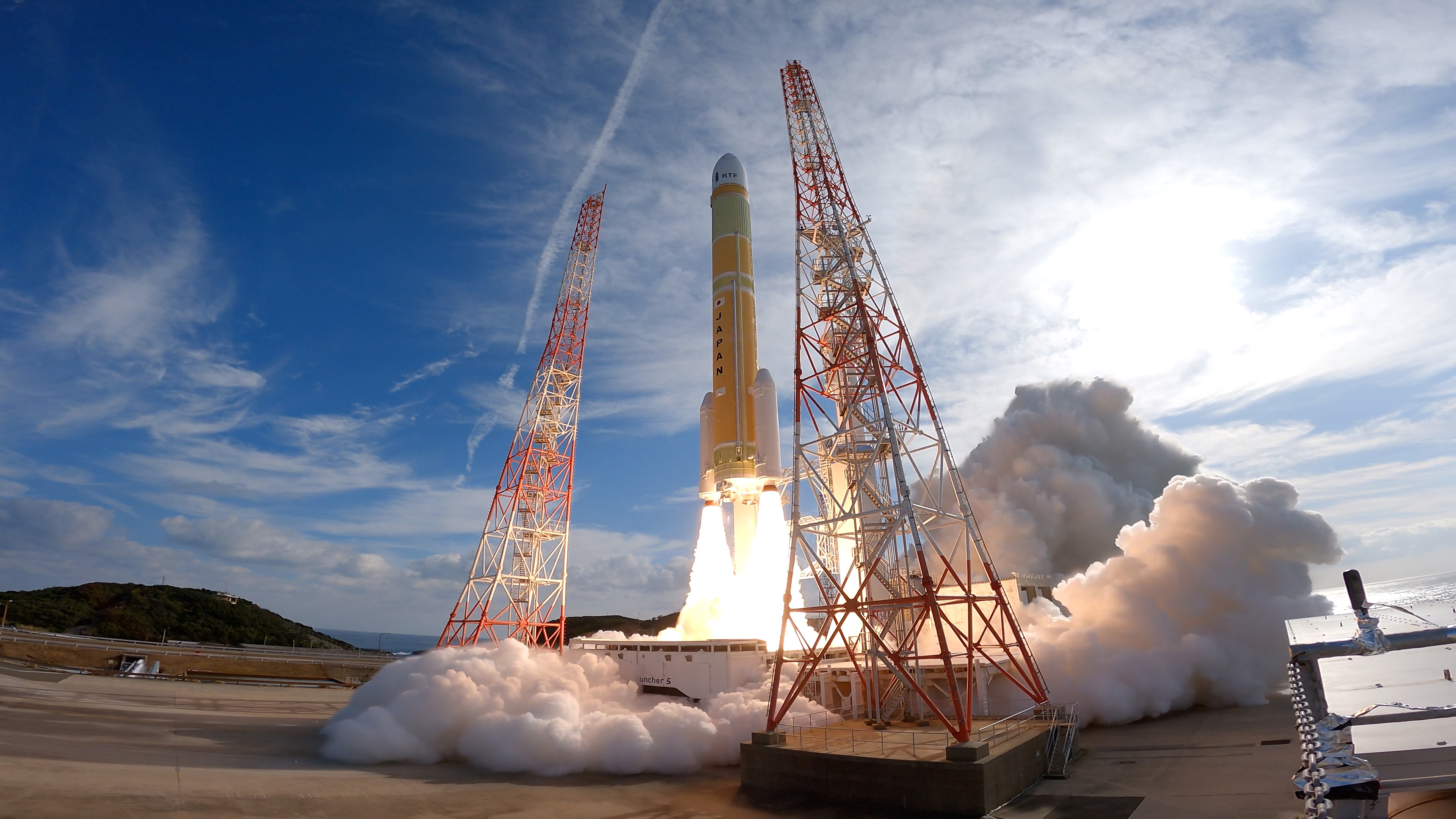
Launches / H3-22
H3-22, flown by Mitsubishi Heavy Industries
This was Mitsubishi Heavy Industries' 2nd launch of 2026, and its 58th in all.
Counting every operator, it was the 189th orbital launch attempt anywhere in 2026, and the second from Yoshinobu Launch Complex LP-2.
 Mitsubishi Heavy Industries
QZSS (Quasi Zenith Satellite System) is a Japanese satellite navigation system operating from inclined, elliptical geosynchronous orbits to achieve optimal high-elevation visibility in urban canyons and mountainous areas. The navigation system objective is to broadcast GPS-interoperable and augmentation signals as well as original Japanese (QZSS) signals from a three-spacecraft constellation. The navigation system objective is to broadcast GPS-interoperable and augmentation signals as well as original Japanese (QZSS) signals from a three-spacecraft constellation in inclined, elliptical geosynchronous orbits.
The H3 Launch Vehicle is a Japanese expendable launch system. Each H3 booster configuration has a two-digit and a letter designation that indicates the features of that configuration. The first digit represents the number of LE-9 engines on the main stage, either "2" or "3". The second digit indicates the number of SRB-3 solid rocket boosters attached to the base of the rocket, and can be "0", "2" or "4". All layouts of solid boosters are symmetrical. The letter in the end shows the length of the payload fairing, either short "S" or long "L". For example, an H3-24L has two engines, four solid rocket boosters, and a long fairing, whereas an H3-30S has three engines, no solid rocket boosters, and a short fairing.
7 flights, 5 of them successful.
Mitsubishi Heavy Industries, Ltd. is a Japanese multinational engineering, electrical equipment and electronics company headquartered in Tokyo, Japan. MHI is one of the core companies of the Mitsubishi Group. MHI's products include aerospace components, air conditioners, aircraft, automotive components, forklift trucks, hydraulic equipment, machine tools, missiles, power generation equipment, printing machines, ships and space launch vehicles. Through its defense-related activities, it is the world's 23rd-largest defense contractor measured by 2011 defense revenues and the largest based in Japan.
58 launches so far, 56 of them successful. The last 2 in a row went to plan.
It went up from Yoshinobu Launch Complex LP-2 at Tanegashima Space Center, Japan.
This one is done, but there is another along shortly. Flyby works out whether it climbs into your sky, and wakes you in time to get outside.
Get Flyby free