Upcoming launch
Go
Owl Around The World (StriX Launch 11)
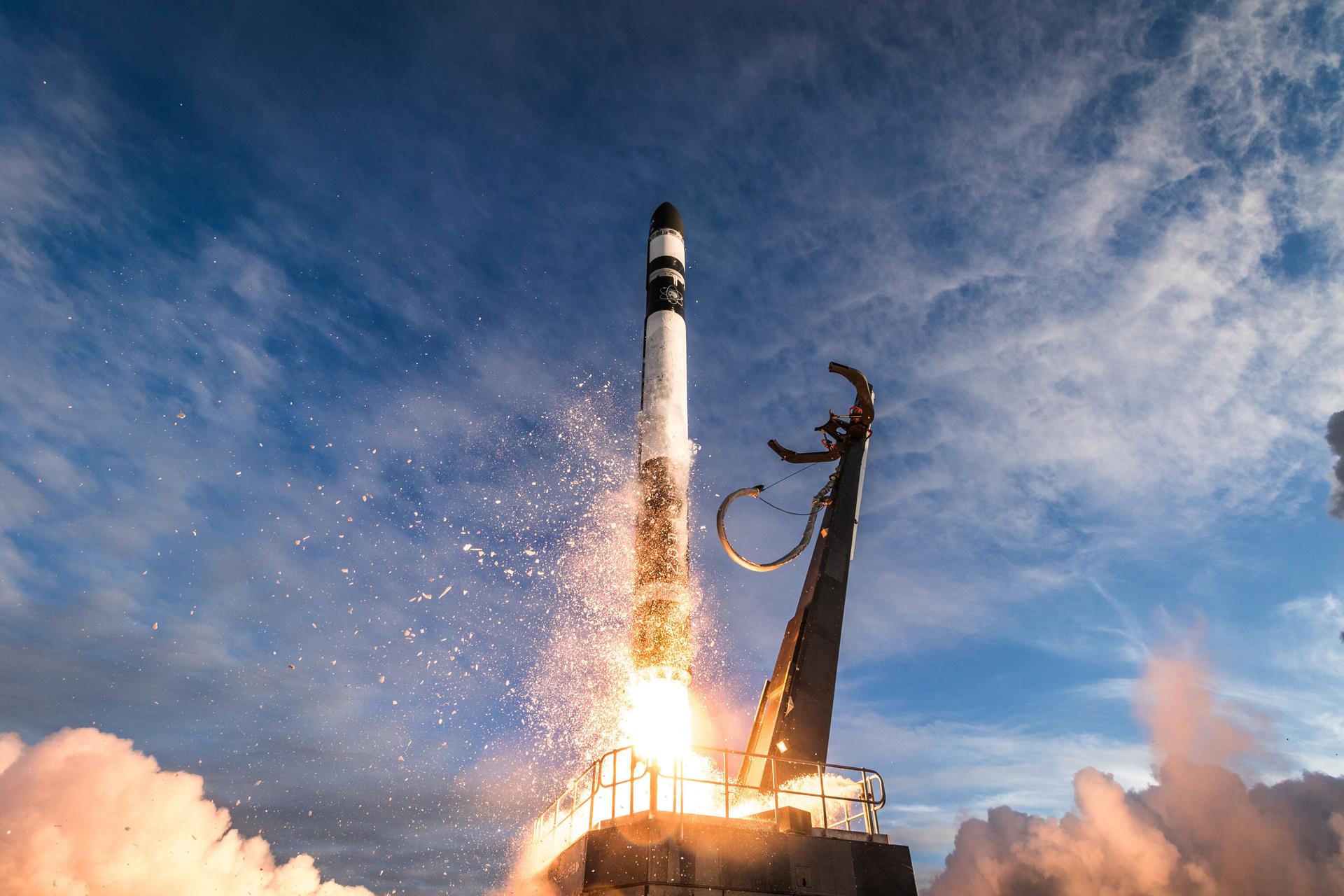
Electron, flown by Rocket Lab
—Days
—Hrs
—Min
—Sec
Launches / Electron
Electron, flown by Rocket Lab
This is Rocket Lab's 15th launch of 2026, and its 94th in all.
Counting every operator, it is the 208th orbital launch attempt anywhere in 2026, and the first from Rocket Lab Launch Complex 1, Mahia Peninsula, New Zealand.
 Rocket Lab
Synthetic aperture radar satellite for Japanese Earth imaging company Synspective.
Electron is a two-stage orbital expendable launch vehicle (with an optional third stage) developed by the American aerospace company Rocket Lab. Electron is a small-lift launch vehicle designed to launch small satellites and cubesats to sun-synchronous orbit and low earth orbit. The Electron is the first orbital class rocket to use electric-pump-fed engines, powered by the 9 Rutherford engines on the first stage. It is also used as a suborbital testbed (called HASTE) for hypersonics research.
93 flights, 89 of them successful. 7 boosters brought back from 9 attempts.
Rocket Lab is an American aerospace manufacturer with a wholly owned New Zealand subsidiary. The company develops lightweight, cost-effective commercial rocket launch services. The Electron Program was founded on the premise that small payloads such as CubeSats require dedicated small launch vehicles and flexibility not currently offered by traditional rocket systems. Its rocket, the Electron, is a light-weight rocket and is now operating commercially. The company is also producing a variety of spacecrafts and spacecrafts components.
93 launches so far, 89 of them successful. The last 52 in a row went to plan.
It goes up from Rocket Lab Launch Complex 1, Mahia Peninsula, New Zealand.
A launch that clears the horizon is visible for hundreds of miles. Flyby takes this rocket’s trajectory and your location and tells you whether it comes over you, when, and which way to face.
Get Flyby free